There is a distinct line between a simple everyday topknot and a historically precise architectural feat of hair.
Advertisement-Continue Reading Below
Understanding the chonmage hairstyle requires looking far beyond the casual updos you see on modern city streets. As we examine the rich tapestry of historical grooming, this specific Japanese aesthetic stands out as a triumph of structural engineering and sociological signaling. For centuries, hair has functioned as a loud communicator of class, profession, and marital status across the globe. Yet few styles carry the sheer visual weight and historical gravity of this samurai classic. Today, we are looking at the mechanics, the cultural history, and the modern fascination surrounding the look. We will explore the rigorous standards required to maintain it, the face shapes that serve as its best canvas, and the reasons why a highly specific look from the Edo period continues to capture the imagination of fashion enthusiasts and history buffs alike.
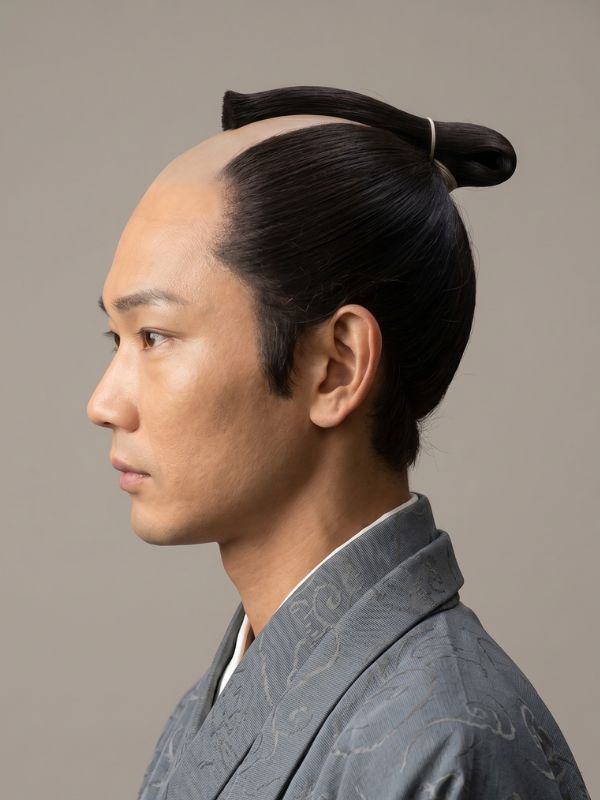
What is the Chonmage hairstyle? Definition: The Chonmage is a traditional Japanese topknot. It is characterized by a shaved crown with the remaining hair grown long, oiled, waxed, and tied into a distinctive tail that is folded forward onto the top of the head. Originally was developed to hold samurai helmets securely during battle. Then, the hairstyle evolved into a powerful status symbol in Japanese society.
The Anatomy of a Japanese Classic
Before we can appreciate the sociological impact of the cut, we must break down its physical architecture. Constructing the style was an art form that required distinct sections of the scalp to be treated completely differently. The style is not merely gathered hair. It is a calculated manipulation of volume and negative space on the human head.
The most recognizable feature is the shaved pate, known historically as the sakayaki. The top of the head was cleared of all hair, extending from the forehead back to the crown. Originally, this was not done for aesthetic purposes. During the turbulent Sengoku period, samurai wore heavy iron helmets called kabuto into battle. Shaving the top of the head allowed for better air circulation and prevented the scalp from overheating during intense physical exertion. It also ensured the helmet sat securely on the head without slipping.
The remaining hair on the sides and back of the head was gathered and heavily oiled. This gathered section, known as the motodori, was pulled upward and tied tightly at the back of the crown. The tail was then folded forward to rest flat over the bare sakayaki. To secure the structure, specialized artisans used a tightly wound paper string called a motoyui. The tension had to be perfect. If the string was too loose, the knot would collapse. If it was too tight, the wearer would suffer from chronic tension headaches.
Sociological Roots and Status Signaling
The evolution of grooming habits often mirrors the political climate of an era. The transition of this specific haircut from a battlefield necessity to a strict societal uniform offers a fascinating glimpse into Japanese history.
The Edo Period Mandates
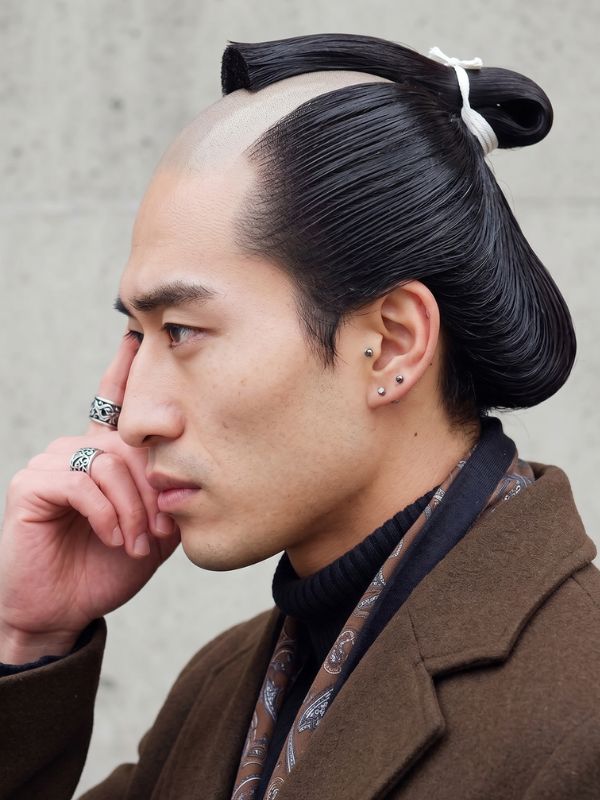
When the Tokugawa shogunate established peace in the seventeenth century, the samurai class no longer needed to wear heavy armor on a daily basis. The practical need for a shaved scalp vanished. However, the ruling class decided to retain the look as a symbol of elite warrior status. The government implemented rigid sumptuary laws that dictated exactly what people could wear and how they could style themselves based on their social class. The topknot became mandatory for the samurai, functioning as a visual badge of honor and loyalty to the shogunate.
Merchants and artisans, observing the prestige associated with the samurai silhouette, eventually adopted their own variations. The thickness of the queue, the angle of the fold, and the width of the shaved portion communicated entirely different things depending on who wore it. You could identify a doctor, a merchant, or a rogue swordsman simply by glancing at the architecture of their crown.
Sumo Wrestling as the Modern Custodian
While the general population abandoned the look following the modernization mandates of the Meiji Restoration in the late nineteenth century, one institution fiercely protected it. Professional sumo wrestling remains the sole modern custodian of this ancient grooming practice. The Japan Sumo Association mandates that all active competitors wear their hair in this traditional manner.
This preservation is managed by highly skilled specialists called tokoyama. These specialized hairdressers dedicate their entire careers to mastering the art of the knot. They use a proprietary wax called bintsuke-abura, a sweet-smelling concoction of chamomile and vegetable oils that hardens at room temperature. The wax provides the extreme hold necessary to keep the heavy hair in place during violent wrestling matches. When a wrestler retires, a deeply emotional ceremony called the danpatsu-shiki takes place. Sponsors, friends, and the wrestler’s stablemaster take turns cutting strands of the hair until the knot is entirely severed, symbolizing the end of his career and his return to ordinary civilian life.
Structural Variations Across Ranks
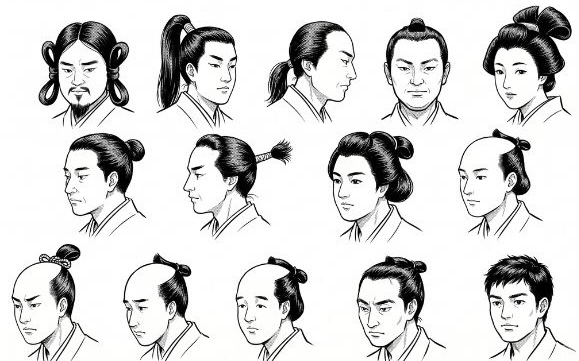
Assuming there is only one way to wear the style is a common misconception. The look varied wildly based on profession, age, and social standing. The subtle geometry of the fold served as a complex language of identity.
| Style Name | Visual Characteristics | Historical Wearer |
|---|---|---|
| Honda-mage | A very wide, dramatic loop positioned high on the crown, resembling an arch. | High-ranking samurai and fashionable aristocrats. |
| Icho-mage | The end of the queue is splayed out to resemble a ginkgo leaf resting on the head. | Top-division sumo wrestlers (sekitori) during formal events. |
| Chasen-mage | The hair is wrapped tightly and points upward resembling a bamboo tea whisk. | Young samurai or boys coming of age, sometimes ronin. |
These variations highlight how a single overarching concept can be manipulated to express infinite degrees of personal and professional identity. The subtle shift in the angle of the queue or the width of the shaved area spoke volumes before a single word was exchanged.
The Mechanics of Maintenance
Achieving and maintaining this rigid aesthetic was an arduous daily ritual. We often take modern razors and styling gels for granted, but the historical grooming process required serious endurance.
In the earliest days of the style, before specialized razors were widely available, the hair on the pate was not shaved. It was plucked out with wooden tweezers. This agonizing process often left the scalp inflamed and bleeding, a physical sacrifice that further emphasized the rugged endurance of the warrior class. Eventually, merciful progress brought about sharp single-blade razors, making the daily shaving of the sakayaki less torturous but no less tedious.
The styling of the long hair required copious amounts of oil and wax. Washing the hair was a rare event, happening perhaps once a month or less, as resetting the elaborate structure took hours. To sleep without destroying the shape, individuals rested their necks on elevated wooden blocks known as takamakura. These small wooden pillows supported the neck while keeping the head suspended in the air, ensuring the carefully waxed architecture remained untouched until morning. The commitment to beauty and status required altering one’s basic comfort, a theme that resonates throughout global fashion history.
Why the Internet Keeps Searching for It
You might wonder why a grooming standard from three centuries ago frequently spikes in global search trends. The answer lies at the intersection of prestige television, gaming, and a modern desire for extreme grooming transformations.
Historical dramas and critically acclaimed media properties have brought the aesthetic to a massive new audience. Hit television shows that meticulously recreate feudal Japan inspire viewers to seek out the reality behind the costumes. High-fidelity video games featuring wandering samurai offer stunning visual representations of the era, prompting players to research the authenticity of the character designs.
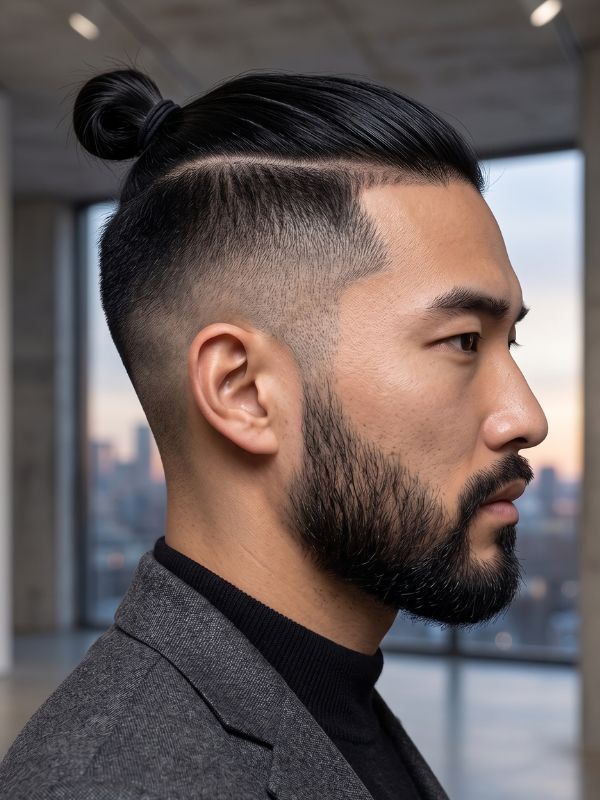
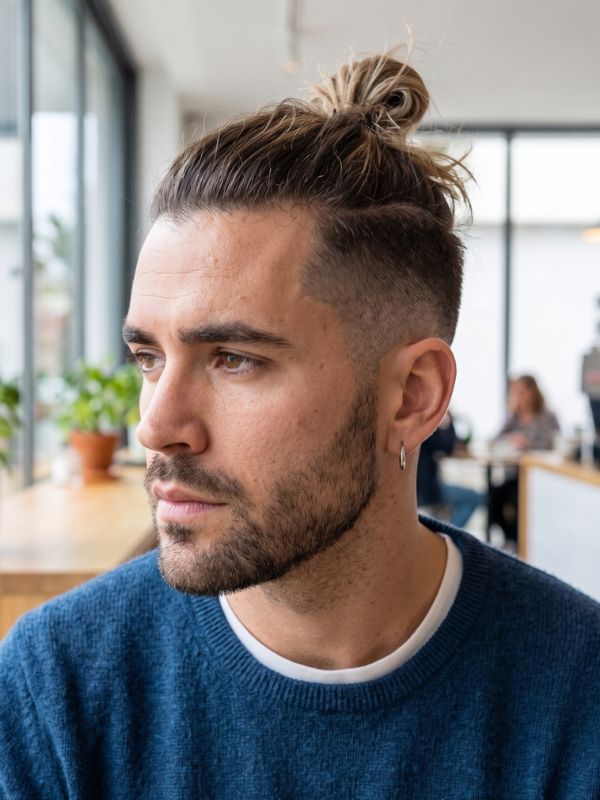
Furthermore, the modern male grooming landscape has become somewhat saturated. After years of generic fades, basic buzz cuts, and standard man buns, avant-garde enthusiasts are looking for something with a richer narrative. People search for the term not necessarily because they want to shave their pates, but because they are fascinated by the sheer audacity and discipline required to pull it off. It represents a level of commitment that stands in stark contrast to low-maintenance modern routines.
Flattery and Facial Geometry
If we evaluate the style purely through the lens of modern beauty standards and facial geometry, we can objectively analyze who it flatters and who might find it challenging to wear. Like any extreme haircut, it interacts heavily with bone structure.
The Ideal Canvas
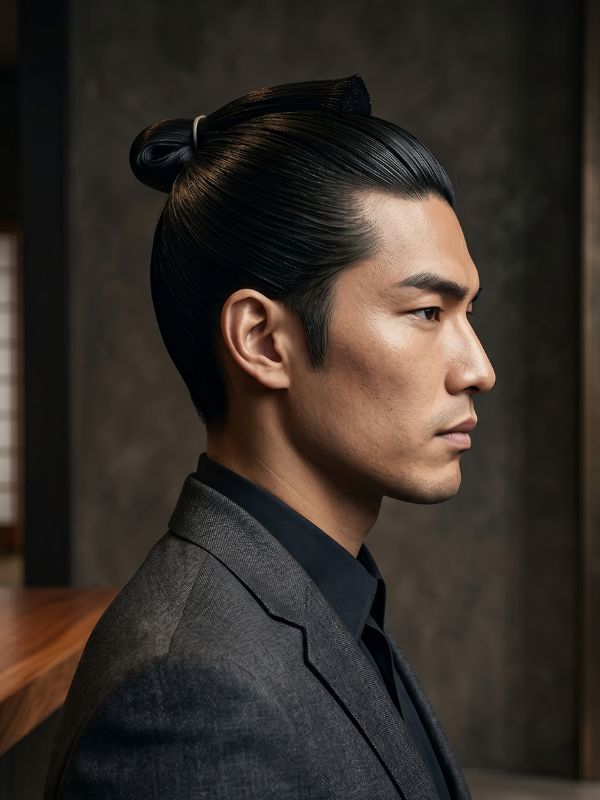
This is perhaps the most unforgiving style one could ever choose. Because the entire front of the scalp is bare and the sides are pulled tautly backward, there is absolutely nowhere to hide. It requires an incredibly strong facial foundation. Oval and square face shapes are the ideal canvas. A strong, defined jawline and prominent cheekbones are essential to balance the heavy visual weight of the hair resting on the crown. Symmetrical features are highlighted beautifully by the stark, framing lines of the pulled-back sides. Men with naturally high, flat foreheads can pull off the shaved sakayaki with a sense of regal authority.
When to Reconsider
Those with round face shapes or softer jawlines might find that the style completely overpowers their features. By pulling everything tightly backward and adding volume exclusively to the top, the face can appear unnaturally elongated or unbalanced. Additionally, those with naturally thin or fine hair will struggle to create the necessary volume for the topknot to fold properly, resulting in a look that feels sparse rather than authoritative. Receding hairlines that do not follow the clean, intentional U-shape of the traditional shave can also disrupt the visual harmony.
Modern Interpretations and The Runways
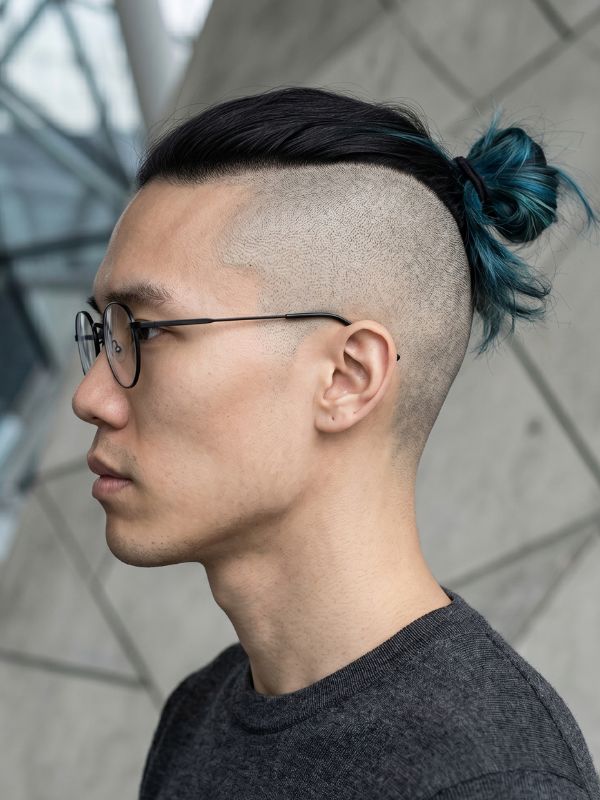
Fashion thrives on historical referencing, and avant-garde designers have frequently borrowed the silhouette to create breathtaking runway moments. Contemporary interpretations focus on the dramatic volume and structural tension of the look without requiring the commitment of a shaved head.
| Element | Traditional Execution | Modern Runway Execution |
|---|---|---|
| The Crown | Completely shaved bare daily. | Hair slicked back tightly to mimic bareness. |
| The Queue | Stiff, folded perfectly forward and pasted down. | Loose loops, textured braids, or dramatic extensions. |
| The Product | Heavy natural wax and plant oils. | High-shine modern gels and setting sprays. |
Editorial stylists use strong holding gels to plaster the front sections of the hair flat against the skull, mimicking the visual void of the shaved pate. The back sections are then whipped into elaborate, towering loops or intricate braids. We see these silhouettes heavily favored in collections from radical Japanese fashion houses, where models walk the runway looking like futuristic warriors. It proves that the underlying geometry of the cut remains incredibly powerful, adaptable, and relevant for creating a commanding visual presence.
Frequently Asked Questions
The intricate nature of this subject naturally prompts a multitude of questions from those attempting to understand its mechanics and cultural implications.
Is it cultural appropriation to wear the style today?
The context of the wearer dictates the reception. In Japan, the full traditional cut with the shaved pate is strictly associated with sumo wrestlers or actors working in historical theater and television. If a person outside of these specific professions adopts the exact historical style, it is less likely to be viewed as offensive and more likely to be viewed as highly eccentric or confusing. It is a very specific uniform. Wearing it to a casual event would be akin to wearing a full military dress uniform from the eighteenth century to the grocery store. It is deeply tied to a specific cultural context.
How long does hair need to be to achieve the shape?
To properly execute the fold, the hair at the back and sides of the head must be quite long. Generally, it requires a minimum of twelve to fifteen inches of length. The hair must travel from the nape of the neck up to the crown, be tied securely, and still have enough length remaining to fold forward and rest over the front of the head. Anything shorter will result in a tiny, upright sprout rather than a dramatic, sweeping fold.
What products replicate the traditional bintsuke wax?
Finding genuine bintsuke wax outside of Japan is incredibly difficult, as it is produced by a select few artisans primarily for the sumo industry. For those working in theatrical costuming or cosplay, modern barbering pomades with extreme hold and a high-shine finish are the best substitutes. Heavy oil-based pomades combined with freezing hairsprays can replicate the shellac-like finish, though they will lack the signature sweet scent of the traditional chamomile formulation.
Appreciating historical beauty standards requires us to look past modern comfort and convenience. The rigorous dedication needed to maintain this specific look speaks volumes about the society that created it. It was never just about managing long hair. It was about visual hierarchy, physical endurance, and absolute loyalty to a strict social code. While you are unlikely to request this precise look at your local salon, studying its complex architecture expands our understanding of how grooming shapes human identity. From the battlefields of feudal Japan to the sacred rings of modern sumo, the chonmage hairstyle remains an unparalleled masterpiece of personal presentation.
Advertisement: